
Brief summary
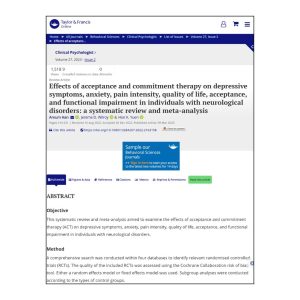 This review explores the impact of acceptance and commitment therapy (ACT) on individuals with neurological disorders, focusing on its effects on depressive symptoms, anxiety, pain intensity, quality of life, acceptance, and functional impairment. By conducting a systematic review and meta-analysis, the authors aimed to synthesise the existing evidence and determine the efficacy of ACT in enhancing psychological and physical outcomes for this population.
Key findings
Reduction in depressive symptoms and anxiety: The analysis suggests that ACT interventions lead to modest improvements in reducing depressive symptoms and anxiety for individuals with neurological disorders.
- Pain intensity and acceptance: Results indicate some improvement in pain acceptance, though the effects on pain intensity were mixed. ACT appears to support individuals in better managing their pain, even if the perceived intensity does not fully diminish.
- Quality of life improvements: ACT was associated with moderate to significant improvements in the quality of life, underlining its potential to aid coping mechanisms in complex conditions.
- Functional impairment: There was limited but promising evidence that ACT interventions may help alleviate functional impairments, aiding individuals in sustaining daily activities.
Practice recommendations
For practitioners working with individuals with neurological disorders, incorporating ACT into intervention plans can be a beneficial approach to address co-morbid psychological and physical challenges. The therapy’s focus on psychological flexibility and acceptance may help patients better manage chronic conditions, improve their quality of life, and reduce emotional distress. Clinicians should, however, be mindful of the variability in impacts on pain intensity and functional impairment, using ACT as part of a broader support framework rather than as a standalone solution.
Reference
Han, A., Wilroy, J. D., & Yuen, H. K. (2023). Effects of acceptance and commitment therapy on depressive symptoms, anxiety, pain intensity, quality of life, acceptance, and functional impairment in individuals with neurological disorders: a systematic review and meta-analysis. Australian Psychologist, 58(3), 210-231. https://doi.org/10.1080/13284207.2022.2163158
View ACT for neurological disorders systematic review and meta-analysis