

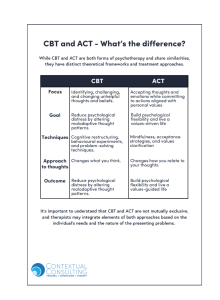
 While cognitive behavioural therapy (CBT) and acceptance and commitment therapy (ACT) are both forms of psychotherapy and share similarities, they have distinct theoretical frameworks and treatment approaches that are worth understanding. This worksheet shows a simple overview of some of the main differences between CBT and ACT through their focus, goals, techniques, approach to thoughts and outcomes.
It’s important to understand that CBT and ACT are not mutually exclusive, and therapists may integrate elements of both approaches based on the individual’s needs and the nature of the presenting problems.
Download CBT and ACT - What's the difference?

