

Brief summary
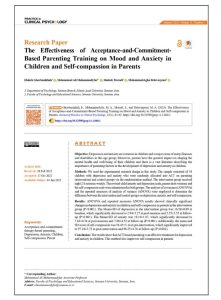 This study examined the impact of acceptance and commitment-based parenting training on children’s mood and anxiety levels, as well as parents’ levels of self-compassion. The research aimed to explore whether this specific approach to parenting education could improve emotional well-being in both children and their parents. The study was conducted with a sample of parents and their children, employing a structured intervention based on acceptance and commitment therapy (ACT) principles.
Key findings
- The parenting training programme significantly reduced mood and anxiety problems in children.
- Parents who participated in the training showed notable improvements in self-compassion, reflecting an enhanced ability to treat themselves with kindness during times of struggle.
- The intervention appeared to have a dual benefit, positively influencing both the mental health of children and the emotional resilience of their parents.
Practice recommendations
Practitioners working in family and child psychology could consider integrating acceptance and commitment-based approaches into parenting programmes. These findings highlight the potential for ACT principles to address not only child-specific issues such as mood and anxiety but also to enhance parental self-compassion, which may further support family dynamics. Regular assessment and tailored interventions could maximise the benefits of such training.
Reference
Ghorbanikhah, E., Mohammadyfar, M. A., & Moradi, S. (2023). The effectiveness of acceptance-and-commitment-based parenting training on mood and anxiety in children and self-compassion in parents. Journal of Practice in Clinical Psychology.
Download paper

